
Introduction to Ethernet If you’ve ever plugged a cable into...
Read MoreOSPF for Enterprise
OSPF (Open Shortest Path First) is the go-to link-state IGP for scalable enterprise intranets, enabling fast convergence, multi-area designs, and hierarchical routing across campuses, branches, and data centers. This pillar explores OSPF from core fundamentals like neighbor discovery and LSAs to enterprise-grade features such as stub areas, virtual links, path optimization, and integration with BGP or MPLS. Master OSPF to build resilient, efficient Layer 3 networks that handle redundancy, load balancing, and policy control in complex corporate environments.
Fast convergence with link-state topology
Multi-area scaling for large enterprises
Built-in redundancy and loop prevention
Secure authentication and filtering
Introduction
Beginner Path - Understand OSPF Foundations
Grasp BGP Core Concepts
Starting out with OSPF in enterprise? These cover the essentials of link-state routing, neighbor formation, and basic setup.
- Introduction to OSPF – Link-state vs distance-vector, areas overview
- OSPF Router ID Selection – Loopback priority and uniqueness
- OSPF Packets & Hello Discovery – Types (Hello, DBD, LSR, etc.)
- Basic OSPF Configuration – Router ospf command, network statements
- OSPF Neighbor States – Down to Full adjacency process
- Single-Area OSPF Basics – Backbone area 0 fundamentals
- Verification Commands (show ip ospf neighbor, show ip ospf database)
Intermediate Path
Configure & Design Multi-Area OSPF
Build production OSPF networks with areas, network types, and basic security for mid-sized enterprises.
- OSPF LSA Types Explained – Router (1), Network (2), Summary (3), etc.
- OSPF DR/BDR Election – Priority, RID, and broadcast networks
- OSPF Network Types – Broadcast, point-to-point, non-broadcast
- Multi-Area OSPF Setup – ABR roles, area borders
- OSPF Authentication – Plaintext, MD5 for secure peering
- OSPF Cost & Metric Tuning – Adjusting interface costs
Advanced Path
Scale & Optimize Enterprise OSPF
Tackle large-scale OSPF with filtering, stubs, virtual links, and integration for global enterprises.
- OSPF Path Selection – Intra-area, inter-area, external preferences
- OSPF Summarization – On ABR/ASBR for route efficiency
- Advanced Stub Areas (Totally Stubby, NSSA, Totally NSSA)
- OSPF LSA Filtering – Type 3/5 distribute-lists, prefix suppression
- Virtual Links & Multi-Area Adjacency – Fixing partitioned areas
- OSPF Over Non-Broadcast
- Load Balancing & Convergence Tuning – Equal-cost paths, timers
Common Problems & Fast Fixes
Neighbor Not Forming
Stuck in Init/2-Way → Fix: Check MTU match, hello/dead timers, area IDs, authentication; verify multicast (224.0.0.5/6).
DR/BDR Election Issues
Wrong DR elected → Fix: Adjust priority (ip ospf priority), clear process; ensure broadcast network type.
Routes Missing in Database
No LSAs flooded → Fix: Verify area types (stub blocking externals?); check filters or virtual links.
Suboptimal Path Selection
Higher cost route chosen → Fix: Tune interface costs, prefer intra-area over inter-area; debug ospf spf.
Flapping Adjacencies
Instability → Fix: Enable BFD, adjust timers; check for MTU/fragmentation on tunnels.
External Routes Not Propagating
ASBR issues → Fix: Ensure redistribution (redistribute connected/subnets); verify NSSA if in stub.
High CPU from SPF
Frequent recalcs → Fix: Summarize routes, use incremental SPF; limit areas/LSAs.
Tools & Platforms Enterprises Use
Introduction to Spanning Tree Protocol (STP)
Switches are simple devices at heart — they forward frames...
Read More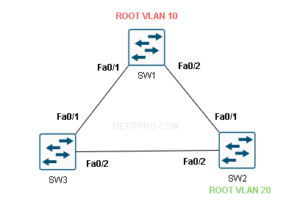
Frequently Asked Questions
Why use OSPF over EIGRP in enterprises?
OSPF is open-standard (multi-vendor), supports larger scales with areas, and has faster convergence in hierarchical designs.
What is the OSPF backbone area?
Area 0; all other areas must connect to it for inter-area routing; acts as transit for non-backbone traffic.
How does OSPF handle loop prevention?
Via Dijkstra SPF algorithm on LSDB; no split-horizon needed like distance-vector.
What are OSPF LSA types for?
Type 1/2: Intra-area topology; Type 3: Inter-area summaries; Type 4/5/7: Externals/ASBRs.
When to use stub areas?
For edge/spoke sites to reduce LSAs; blocks externals, injects default route.
How to change OSPF network type?
Use ip ospf network (broadcast/point-to-point/etc.) on interface; affects DR election and timers.
What causes OSPF database overload?
Too many LSAs in large flat areas; fix with multi-area design and summarization.